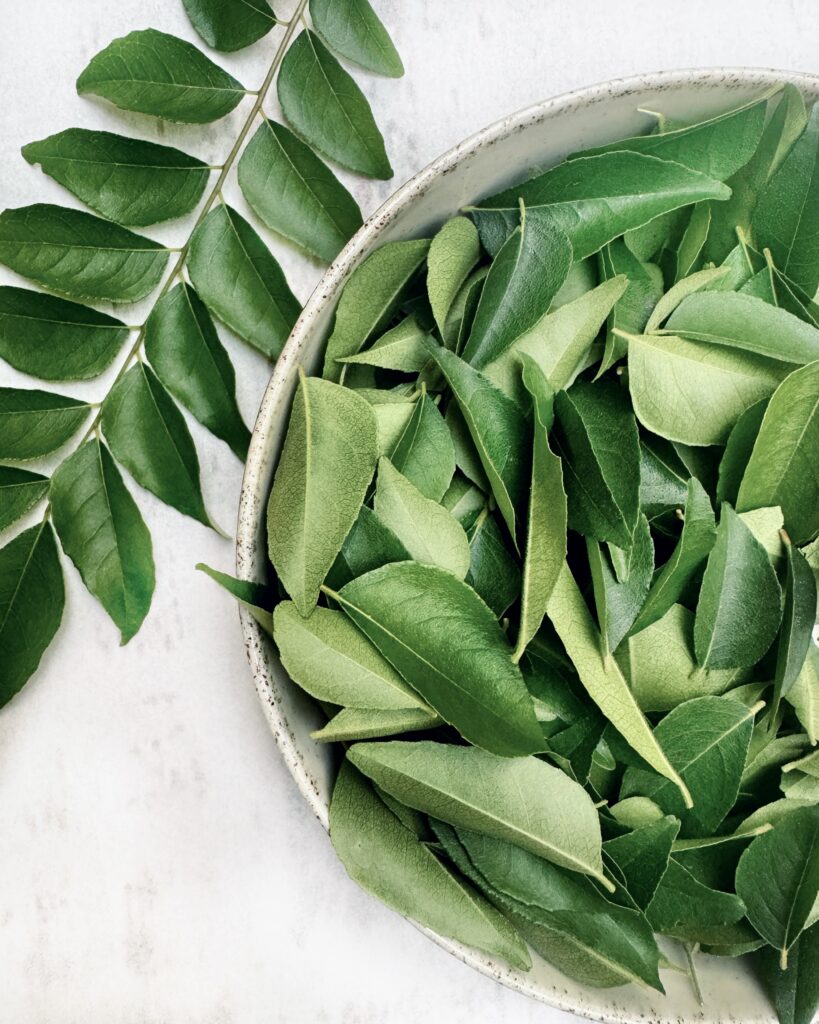
Curry leaves are one of the staples of South Indian and Sri Lankan cuisines. Together with garlic and onions, they form a savory backbone for many types of curries and gravies. Their unique taste and aroma place them among those foods that one either loves or hates. Personally, I am the biggest fan of curry leaves and cannot imagine my kitchen without them! I use them a lot in both authentic recipes and to add flavour to simple everyday meals.
At a Glance:
Contrary to a popular belief, the leaves have nothing to do with curry powder. They are not even a part of it. The leaves come from the curry tree which is native to South India and Sri Lanka but can be encountered in other parts of the world. If you, like me, live in Dubai, check your neighborhood: there may be one growing on the roadside or in a common garden.
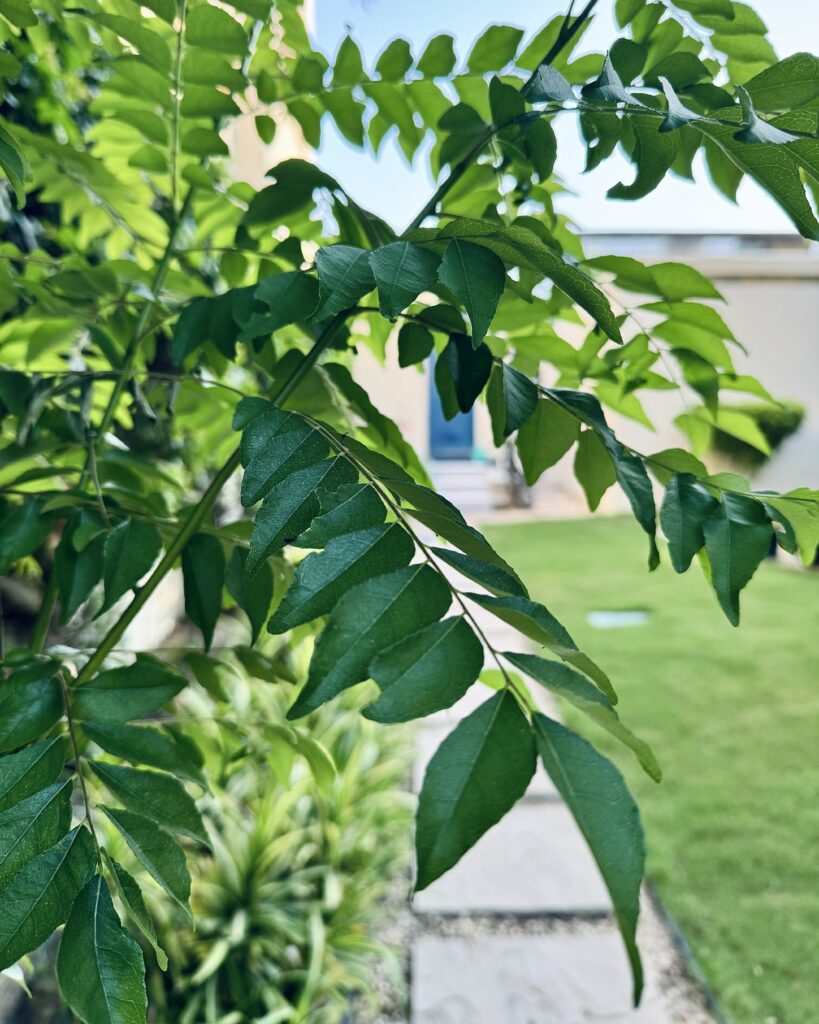
If you aren’t as lucky and have to head to a store, best buy them fresh on the stem. Good quality leaves are dark green, plump and glossy. Use within a day or two as they quickly lose fragrance. Avoid dried leaves – they have very little flavour and don’t contribute with much at all.
The Flavour Profile:
Few spices cause as many debates on how to describe their flavour and scent as curry leaves do. I have come across references ranging from ‘lemony’ to ‘exhaust’, with anything from ‘floral’ to ‘paint-like’ in between. There is only one thing everyone agrees on: the aroma is very unique. Maybe that’s why it causes so much controversy 😀
To me, fresh leaves smell grassy, sweet and slightly peppery. Tempered in oil, they immediately develop a deeper, warmer, almost musky-like fragrance. This is because they contain a sulfurous compound which conveys a rich flavour often described as ‘meaty’ – think of comforting, sweet and savory scent of cooked garlic. There is something deeply soothing about it, and no wonder curry leaves frequent hearty dishes like soups and curries.
How to Use Curry Leaves:
The leaves are never consumed fresh. Most commonly, they are briefly tempered in hot oil or ghee with other spices and aromatics:
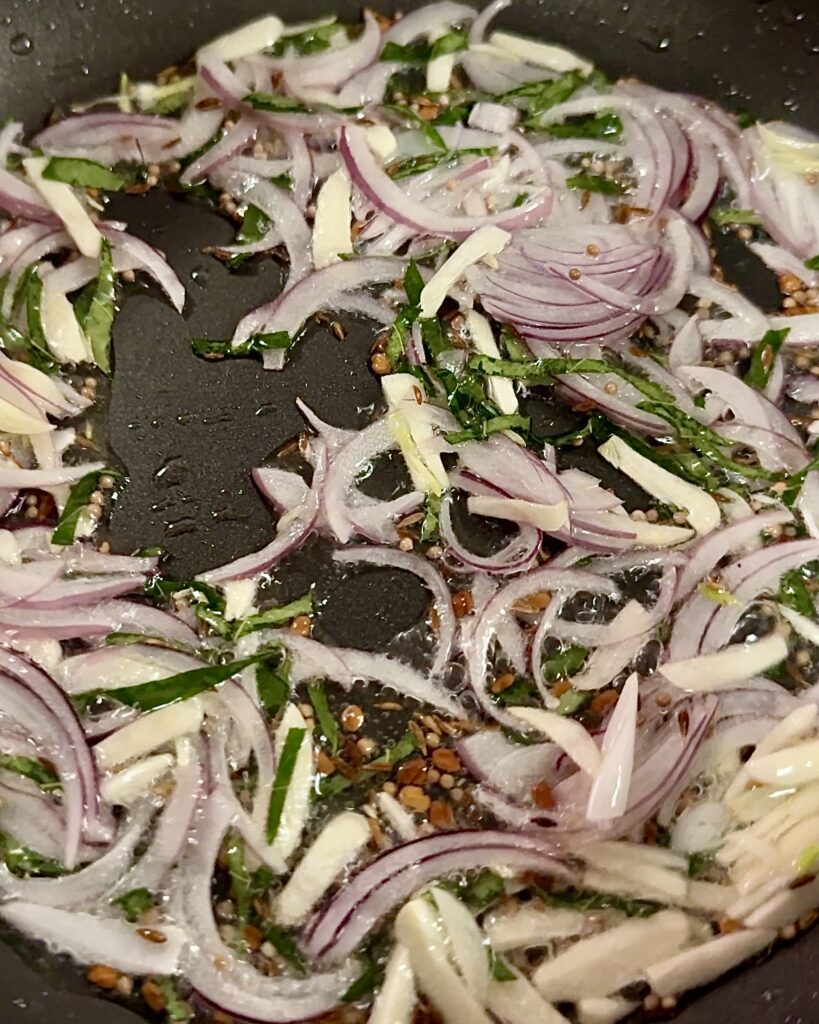
This process is called ‘tadka‘, and it can be done in two ways –
- At the beginning of cooking. Once the aromas develop, ingredients such as vegetables, protein, coconut or almond milk go in. During simmering, the gravy slowly absorbs all the amazing flavours.
- At the end of cooking. Hot infused oil is poured over vegetables or lentils just before serving for an instant flavour boost.
Another way to enjoy the leaves is to gently sizzle them in oil and use as a garnish:

Pairings and Recipes with Curry Leaves:
Because of similarities in flavour profiles, the leaf works really well with garlic and mustard seeds and you will often encounter this trio in authentic recipes. Other common spice partners include savory cumin and fenugreek and floral cardamom, fennel and coriander. Matching spices is useful for the finishing tadkas where different dishes may call for different combos. For example, in Coconut Dhal Curry the classic mix of curry leaves, red onion, garlic and mustard seeds is amazing. While if you are giving a makeover to Roasted Cauliflower or Zucchini, you can swap mustard seeds with fennel, cumin and coriander.
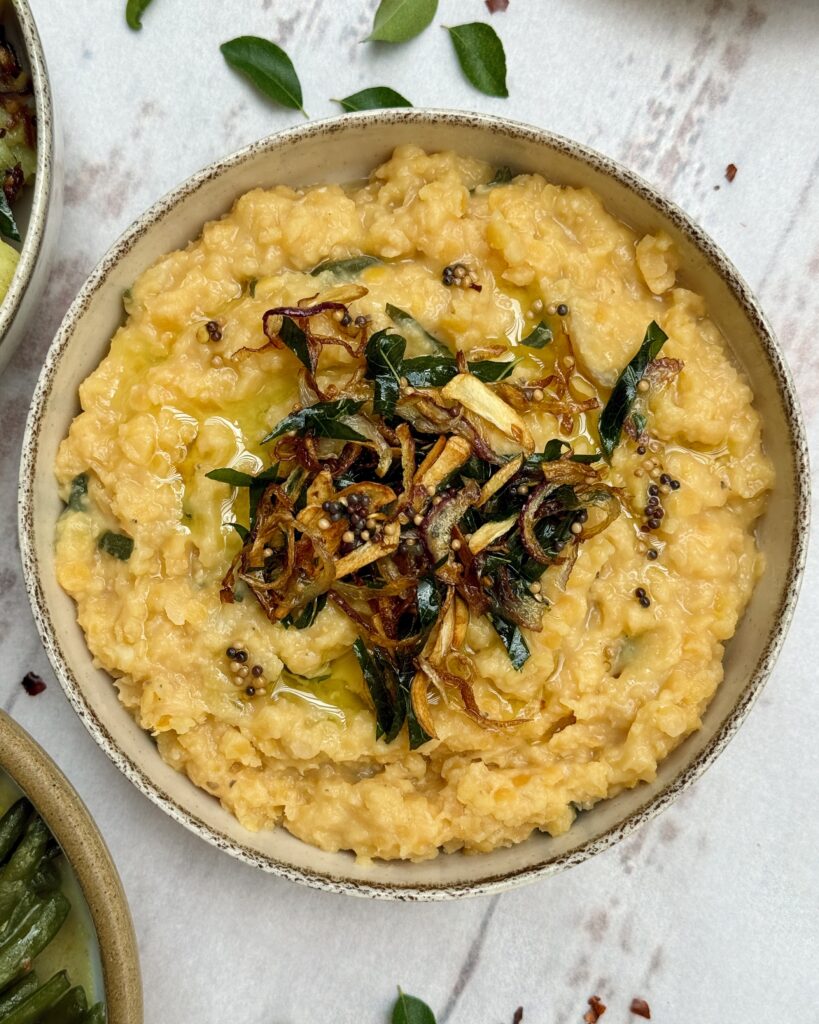
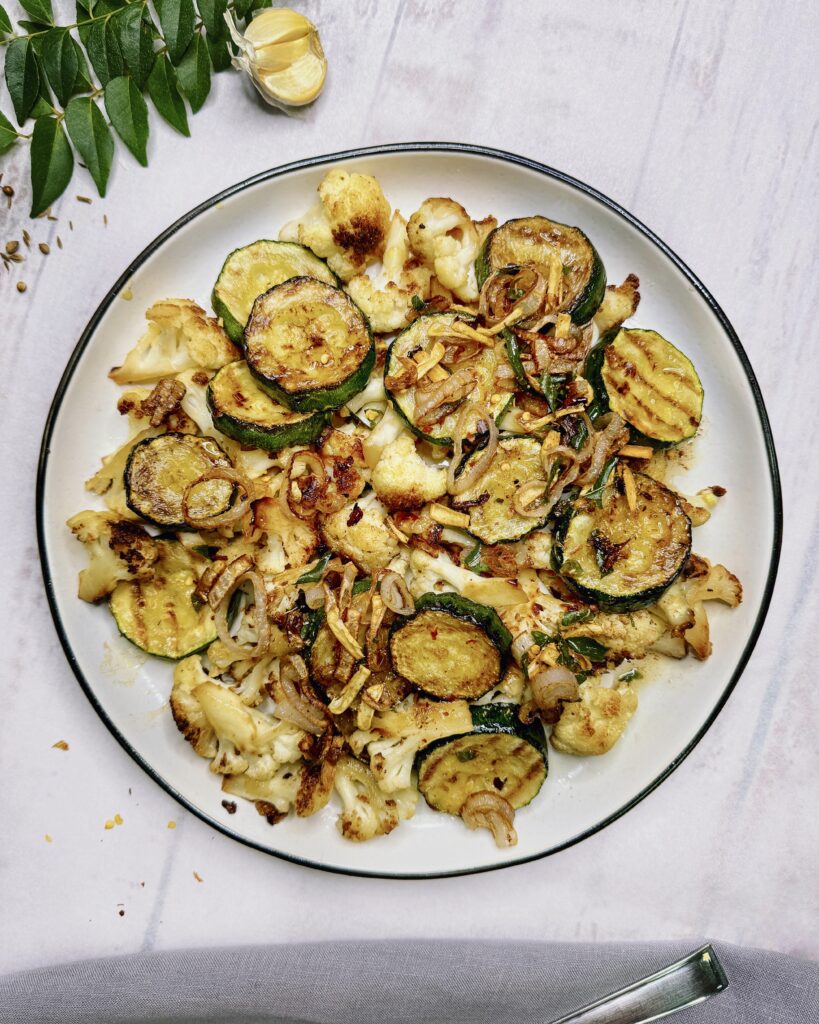
Curry leaves are amazing with vegetables and protein alike and work equally well in coconut/almond milk or tomato-base curries. These recipes are the proof:
Pumpkin Curry with Almond Milk
Sri Lankan Style Chicken Drumsticks Curry
If you are not ready to go all in just yet, why not test the leaves in one of your usual recipes? Got some leftover roasted lamb or chicken? Fry long strips of sweet bell pepper with a few pieces of fresh tomato and a bunch of sliced curry leaves in oil, season with salt and turmeric, add the meat and warm through. Grab a pita or tortilla and make a wrap:
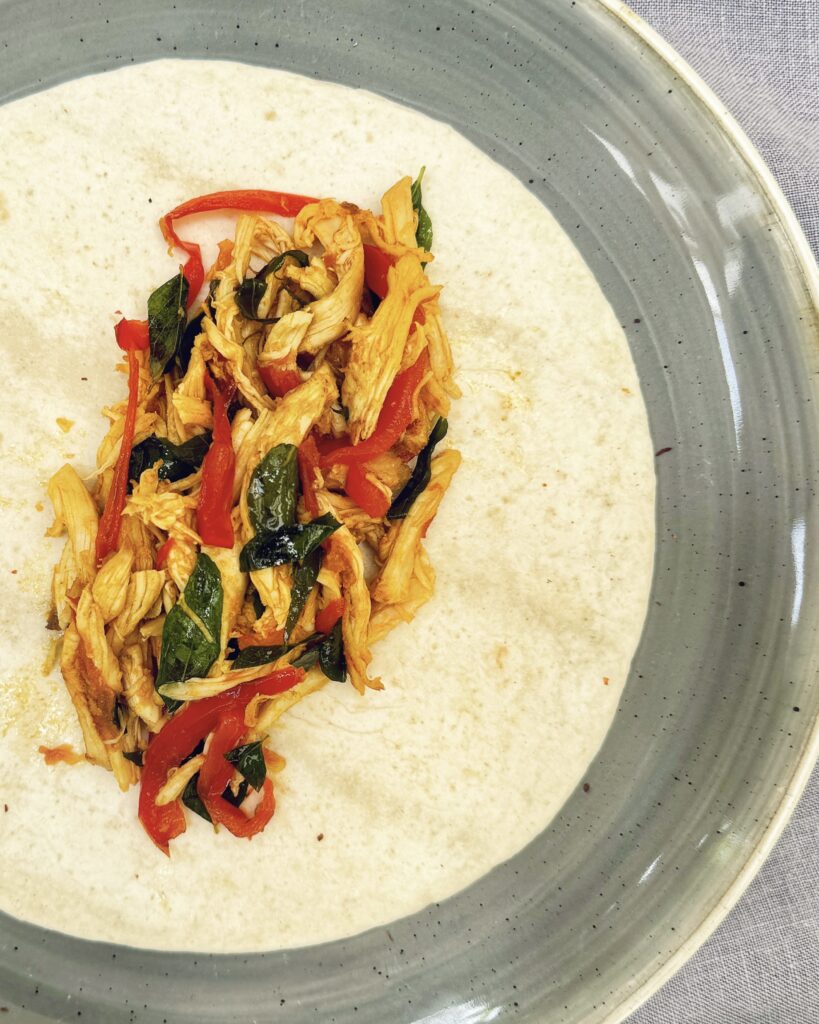

You can also add a bunch of leaves to other familiar dishes like eggplant or meat stews, fish or even mussels. Try something different and give them a chance to bring in a new and exciting culinary experience!
***